
Getting into Max/MSP


One time the original Marain Dictionary went down. I wanted to do my part in preserving that effort, but I also wanted to post something about
I’ve been working on restoring and expanding the Marain dictionary, and wanted to get a bit further than looking up words individually. I want to put a short English phrase in and get back as much Marain as the vocabulary and grammar can support. Anything missing should come back as <??>.
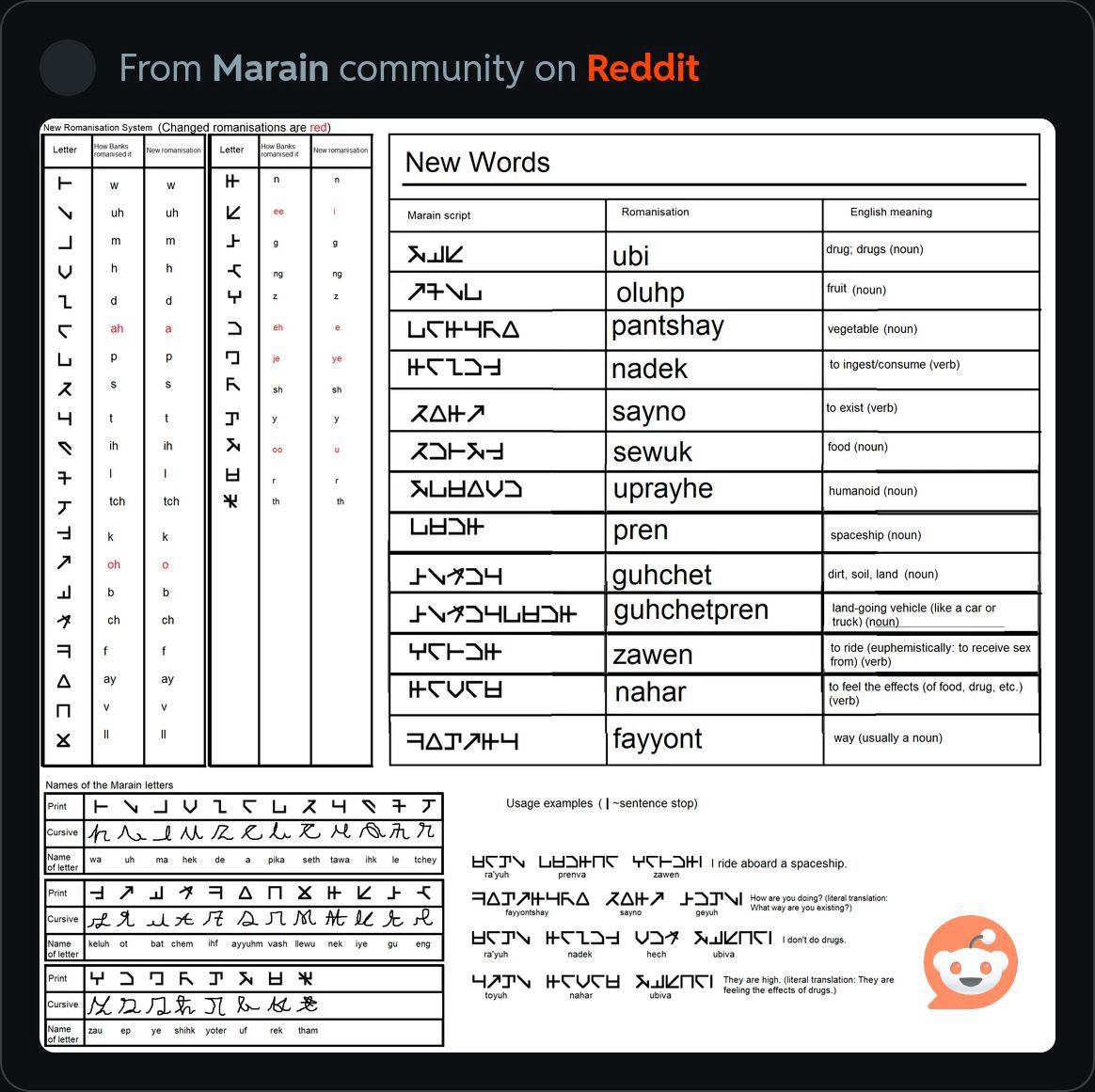
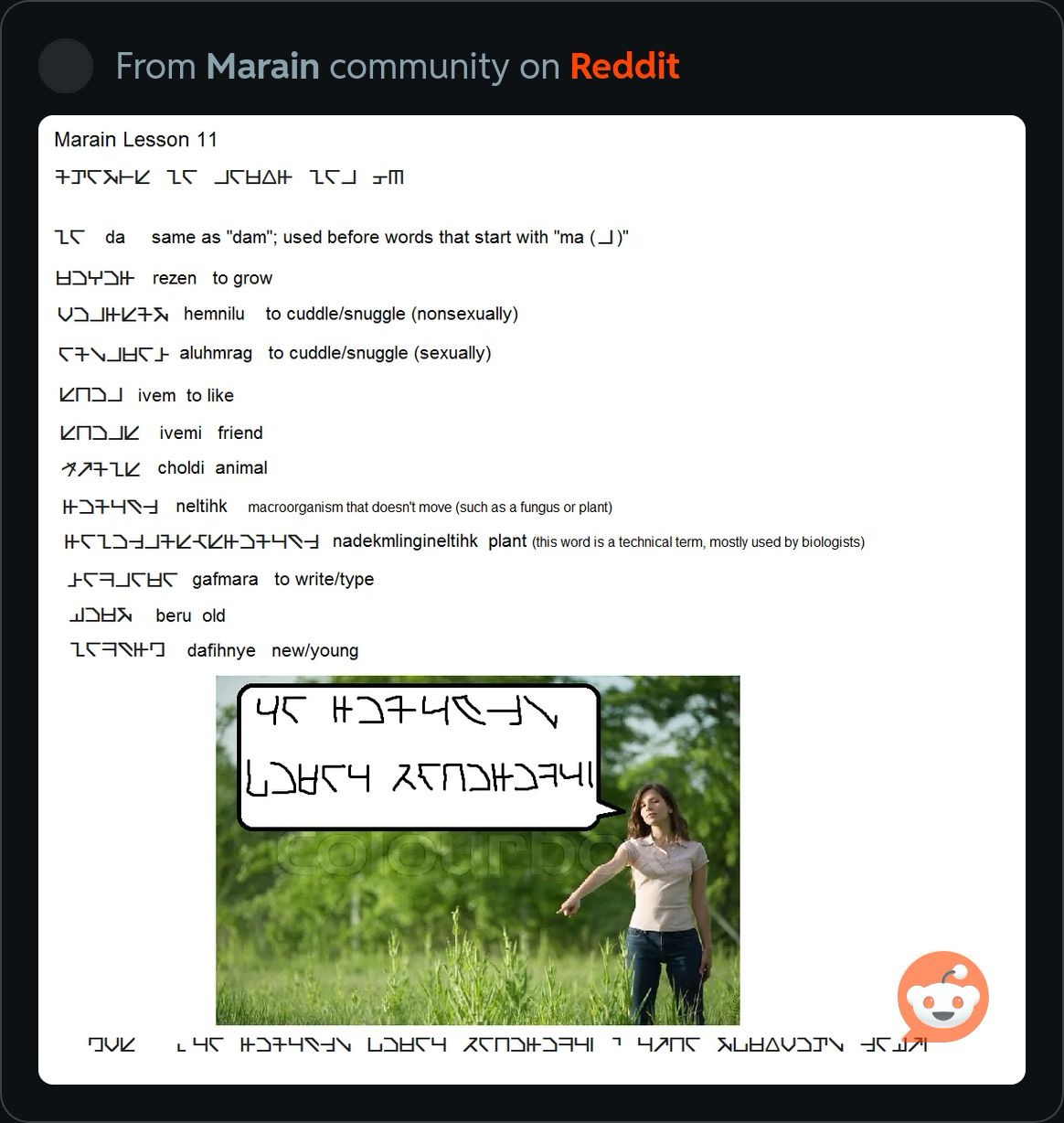
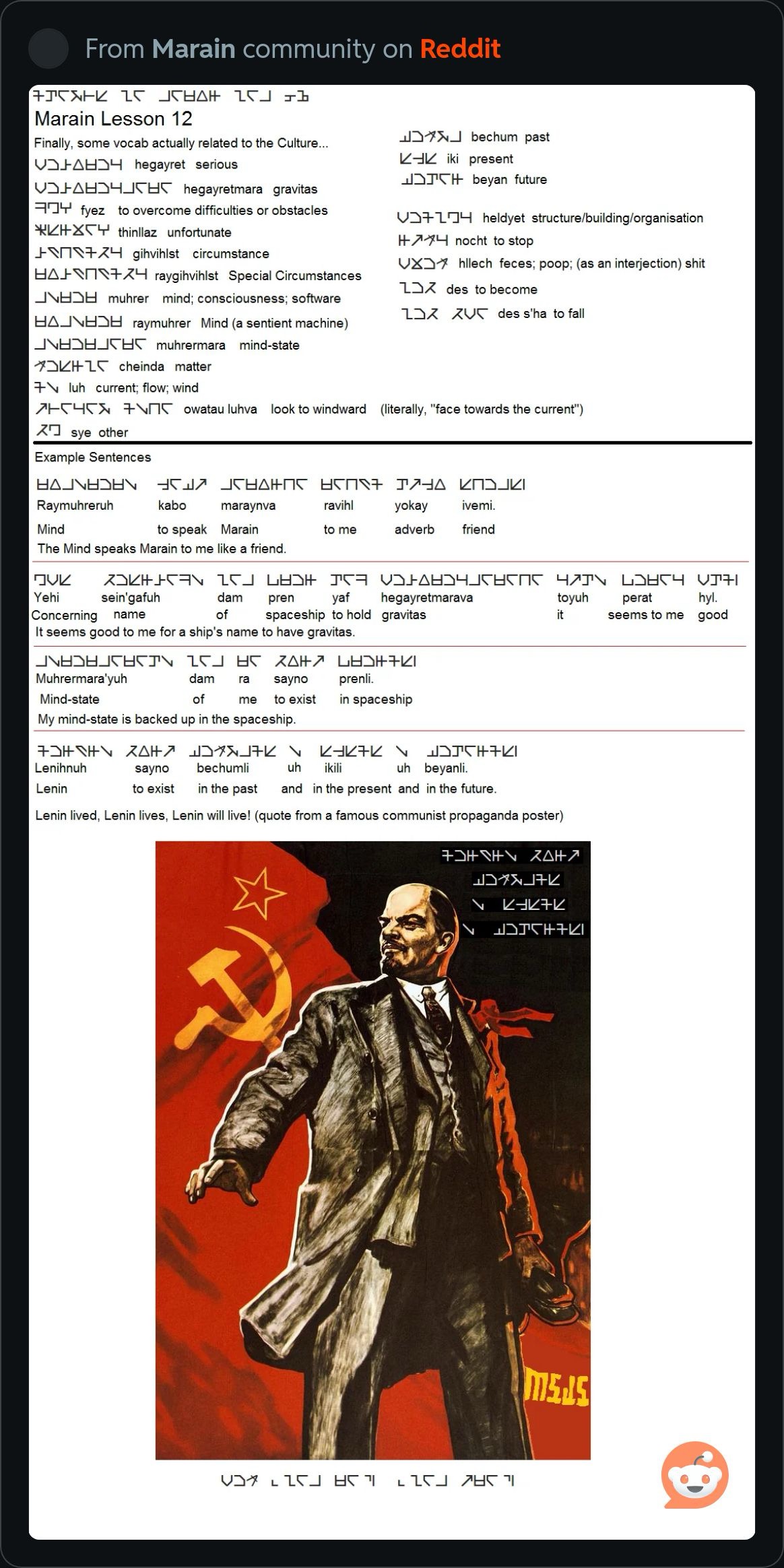
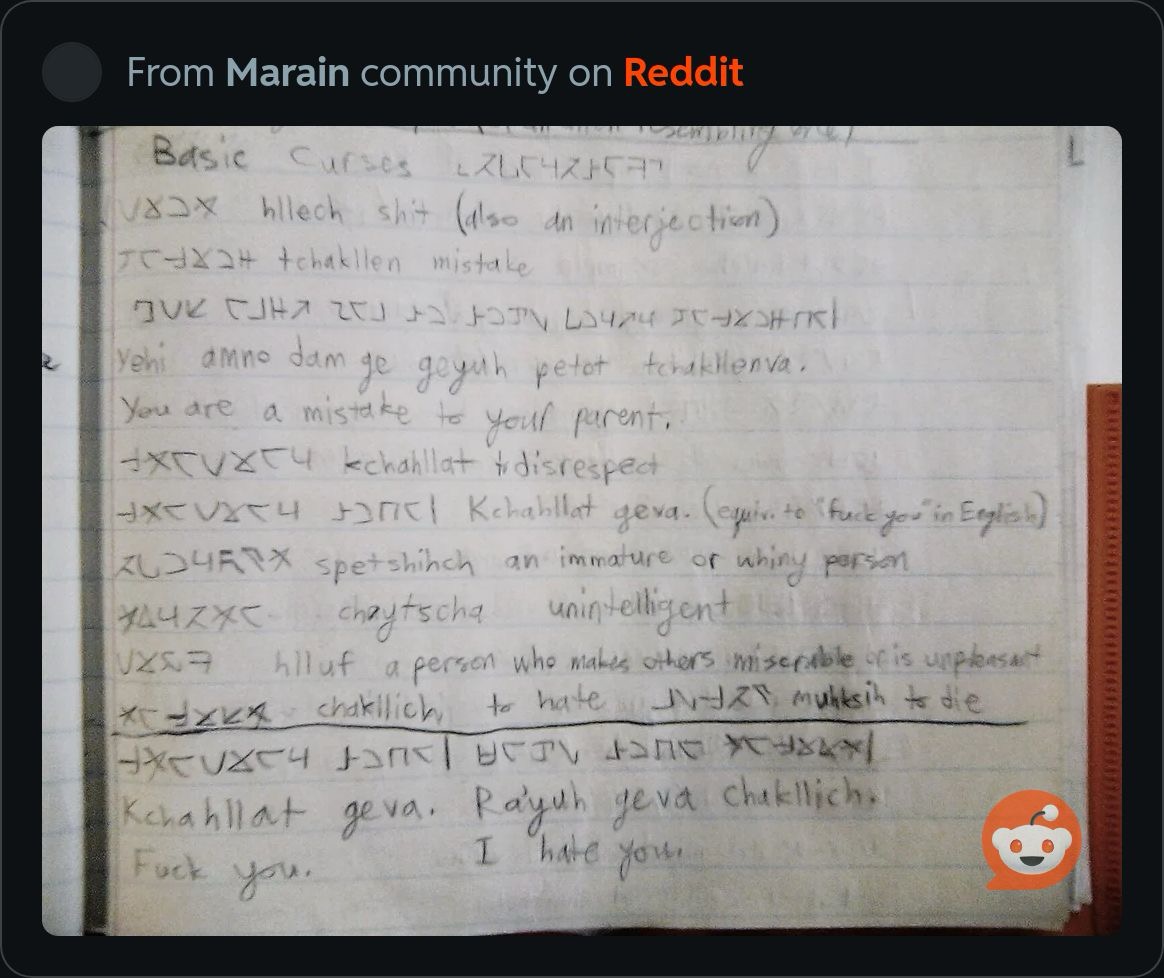
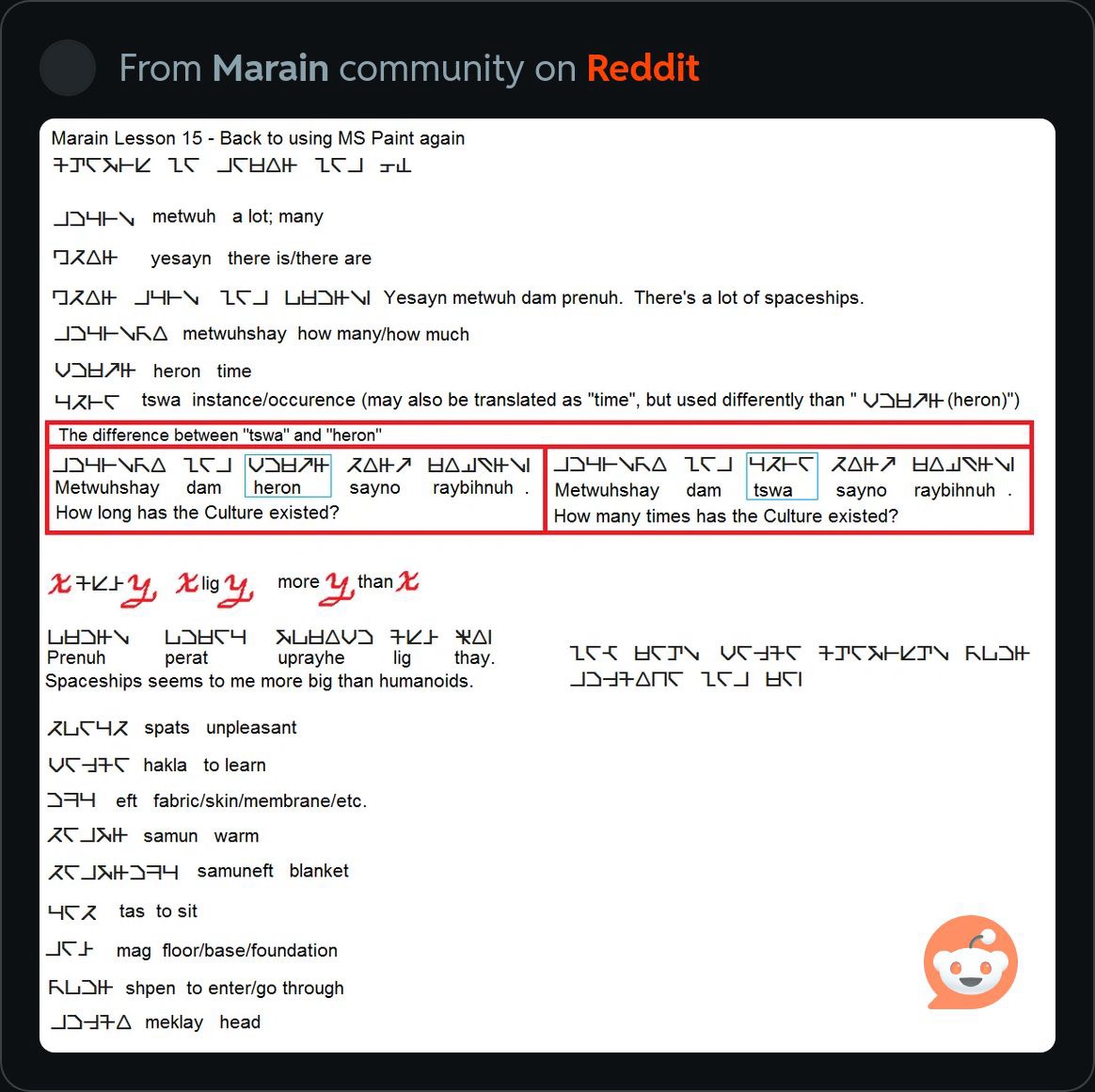
This turns out to require a fair bit of sorting through what is actually known. I have fifteen images of community lessons and notes, now transcribed, which provide enough material to start recovering sentence rules. There are also spelling changes, inconsistencies, and some handwriting that is doing its best to remain mysterious.
The resulting marain_rules.md is a working account of those lessons. The community material needs to keep its provenance; these rules should not acquire the authority of something Banks wrote just because they end up in a nice table on my site.
Anyway, there is enough here to do some interesting stuff!
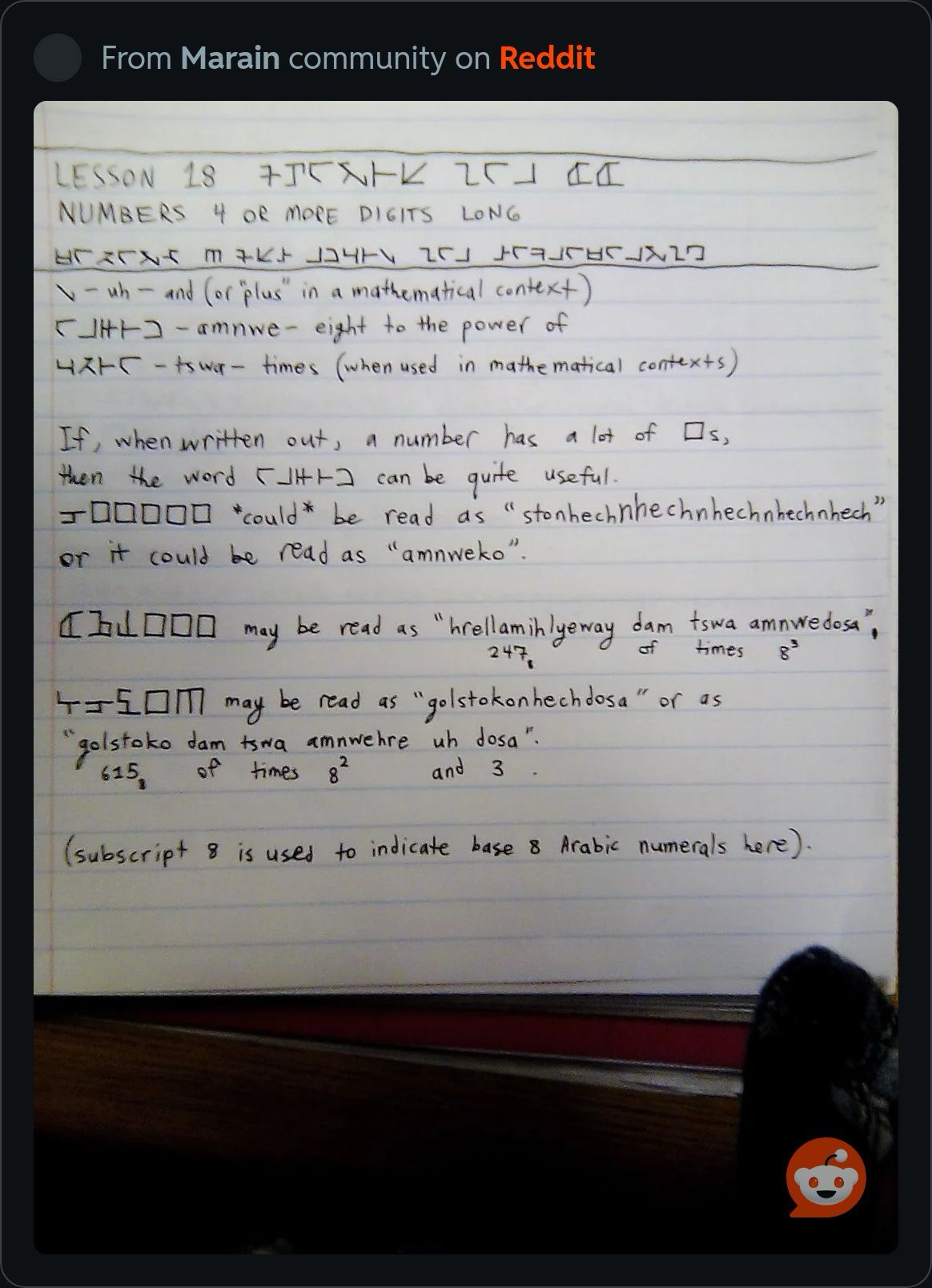
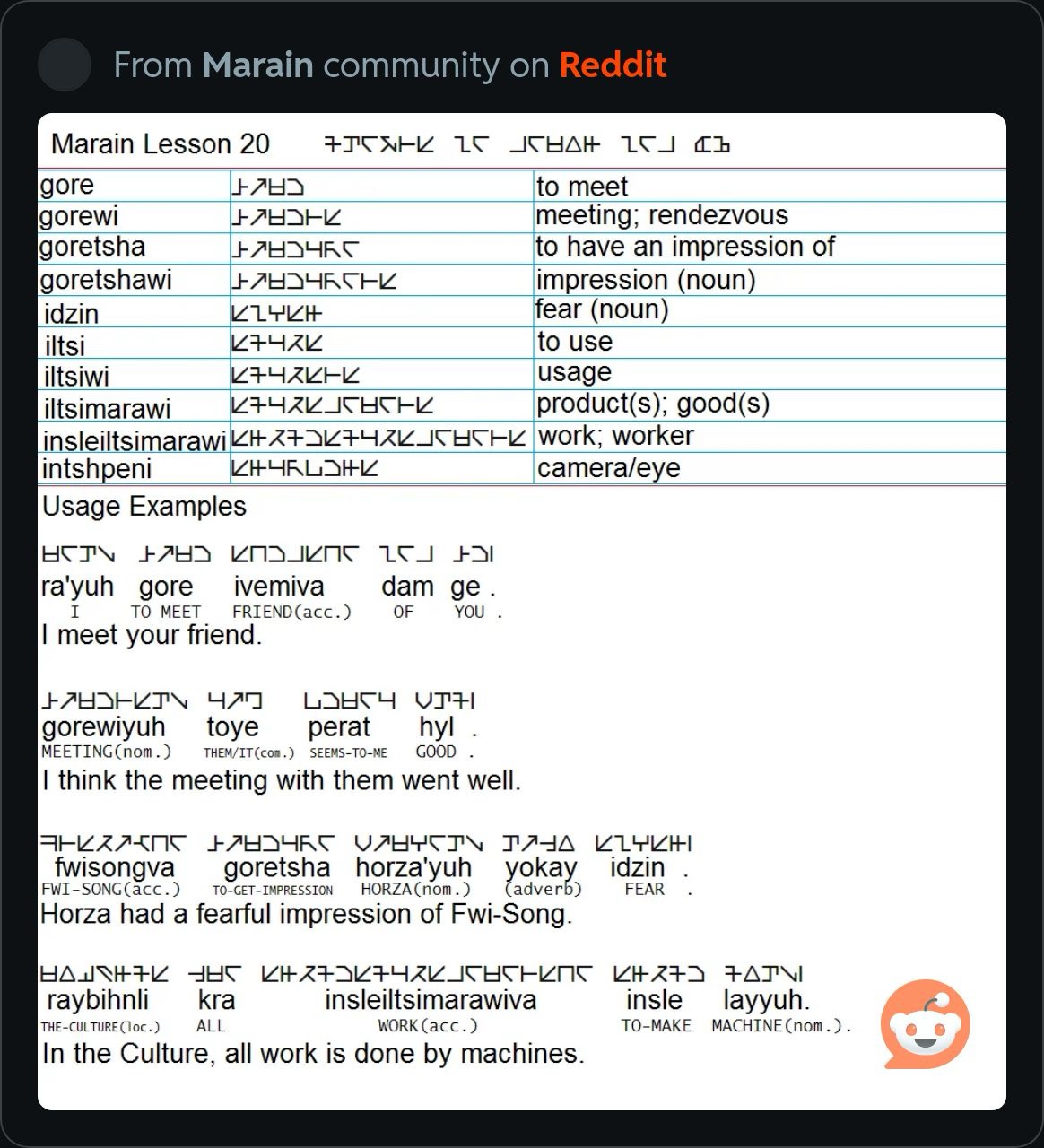
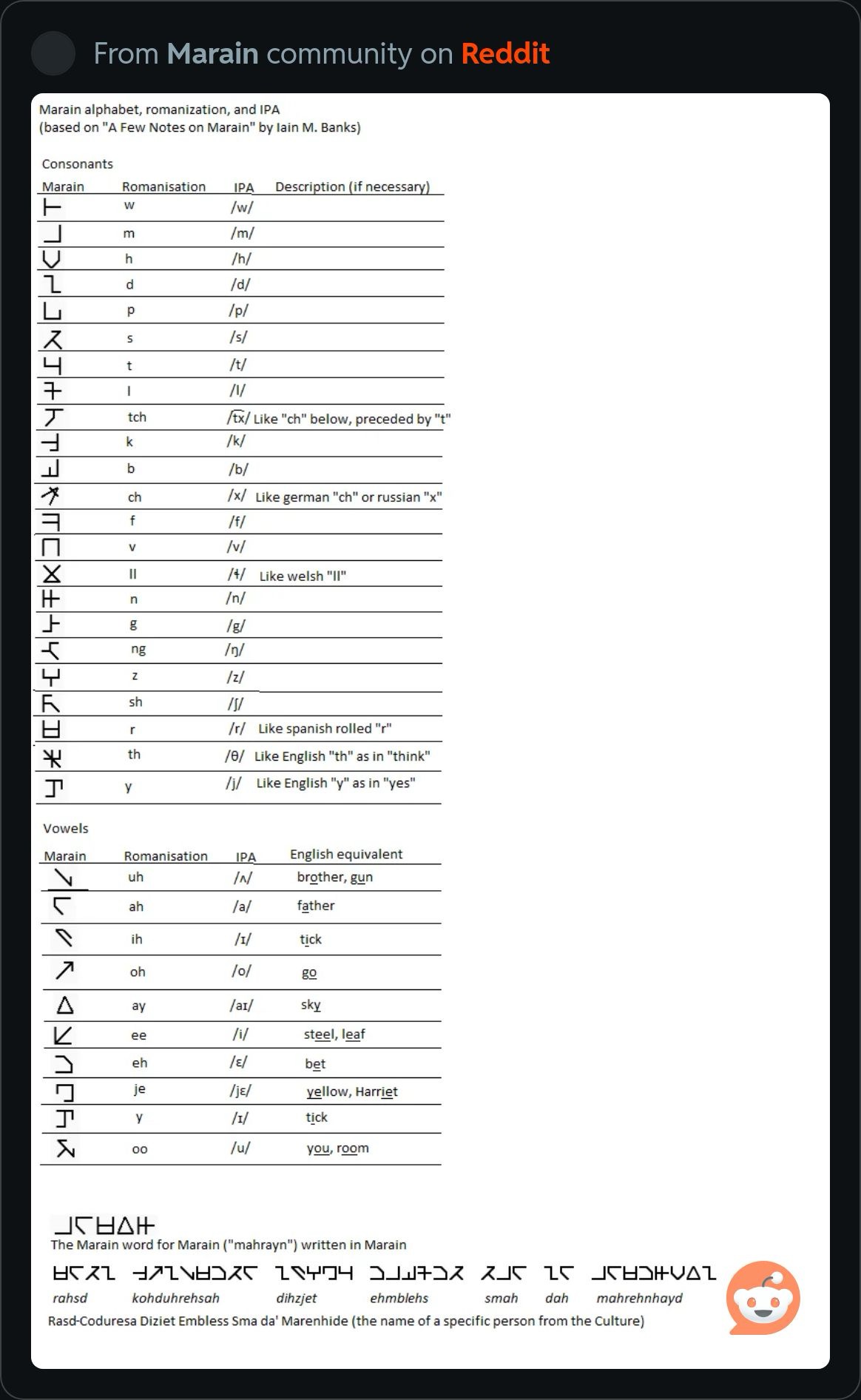
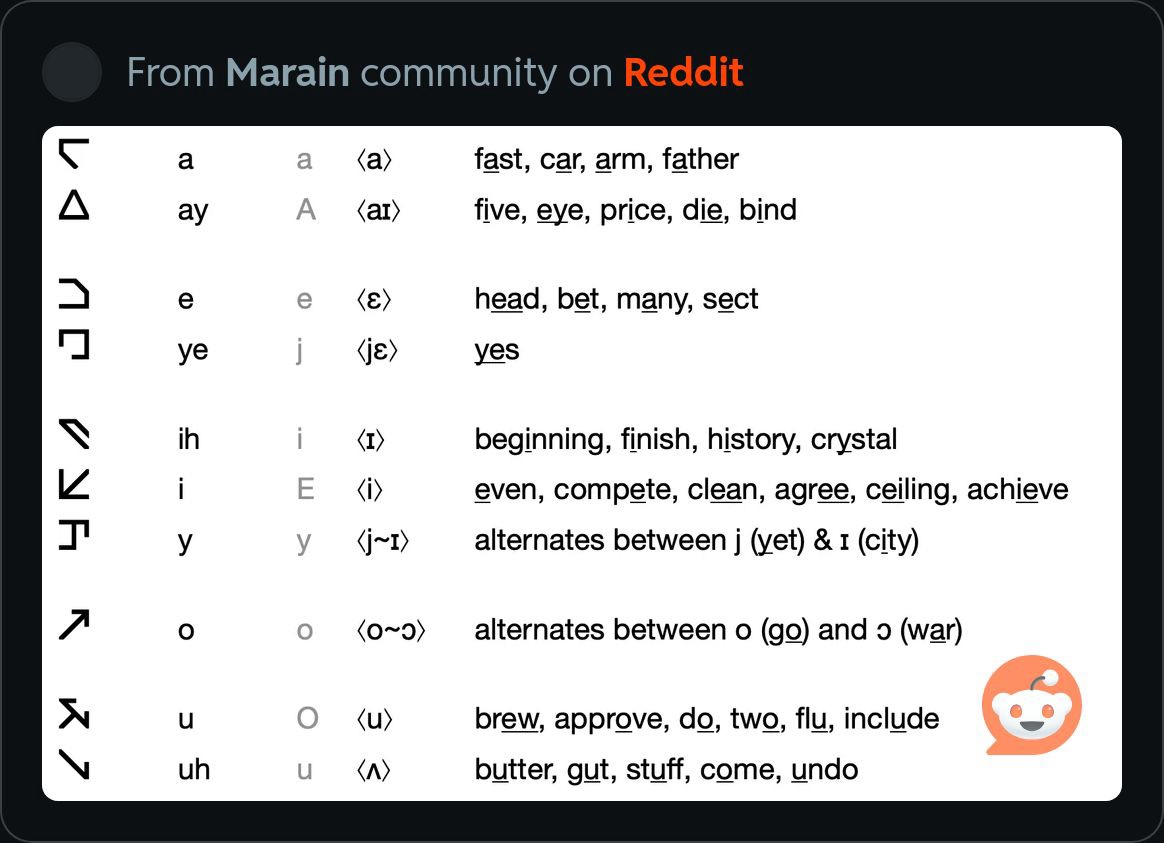
I’ve included all fifteen recovered scans here, sorry the numbers do not correspond to the entries, not all are online it seems… Click any image to open the full-resolution original; the remaining sheets are collected at the end. The scans preserve their original spellings, including older romanisation.
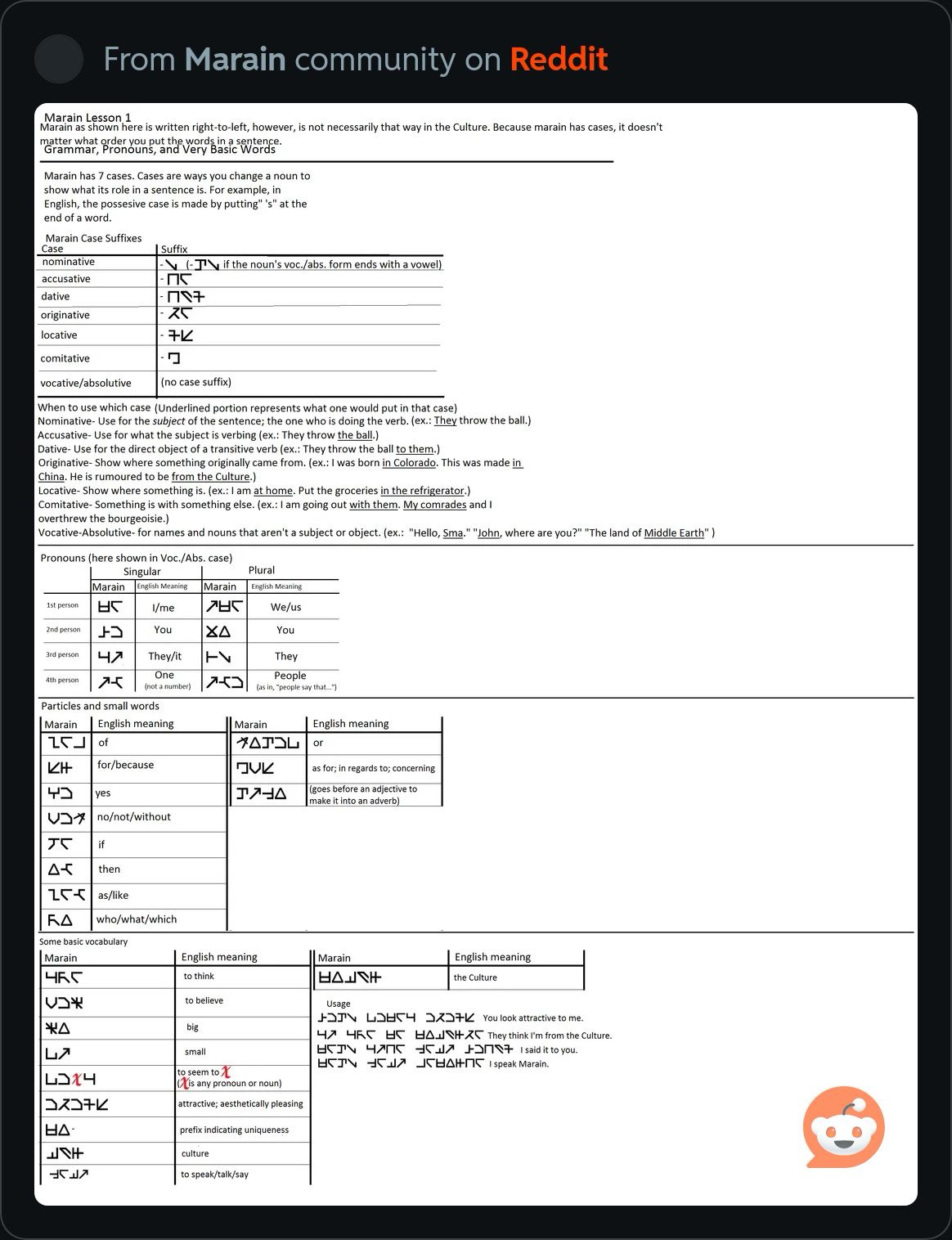
Enough about the source material. The case endings are a useful place to start. They tell us what a noun or pronoun is doing in the sentence:
| Job | Ending |
|---|---|
| Subject, the thing doing something | -uh, or -yuh after a vowel |
| Object, the thing acted upon | -va |
| Recipient, who something goes to | -vihl |
| Source, where something comes from | -sa |
| Location | -li |
| Companion or association, “with” | -ye |
So the lesson’s “I speak Marain” is ra'yuh kabo maraynva. The ra gets its subject ending, and marayn gets its object ending. The apostrophe in ra'yuh helps separate the letter boundaries; it does not add a sound.
These endings allow flexibility in word order. For the draft helper, subject–verb–object is a convenient default. The examples do not justify making that order compulsory, or inventing a bunch of verb endings to make everything behave like English.
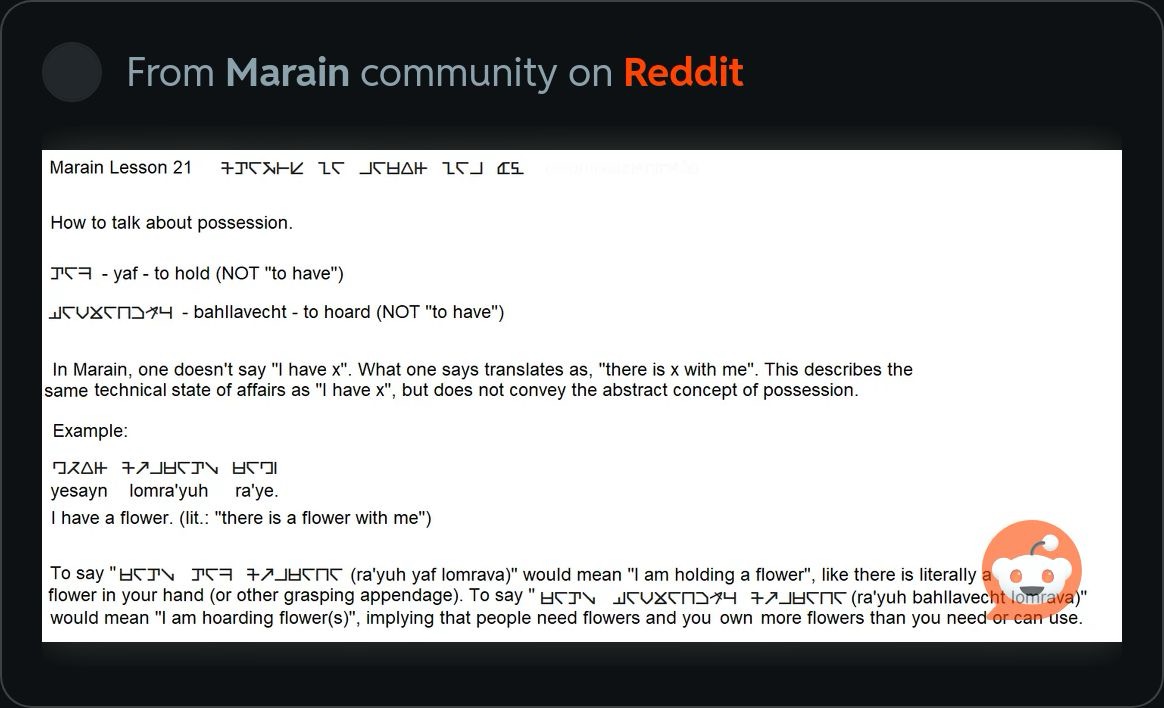
The bit that interests me most is possession. Lesson 21 gives:
yesayn lomra'yuh ra'yeA flower exists with me.
That is how the lesson expresses “I have a flower.” yaf is for physically holding something. Another word, bahllavecht, means hoarding, or owning more than one can use.
English “have” does a lot of work, and a careless dictionary lookup could turn a flower being with someone into an assertion about holding or owning it. There is a meaningful difference between something being available to you and accumulating more than you can use. It would be a shame to lose that in the translation machinery.
This also means the program needs to notice what “have” is doing. “I have eaten” cannot be put through the flower template. A small phrase helper still needs to know when to stop.
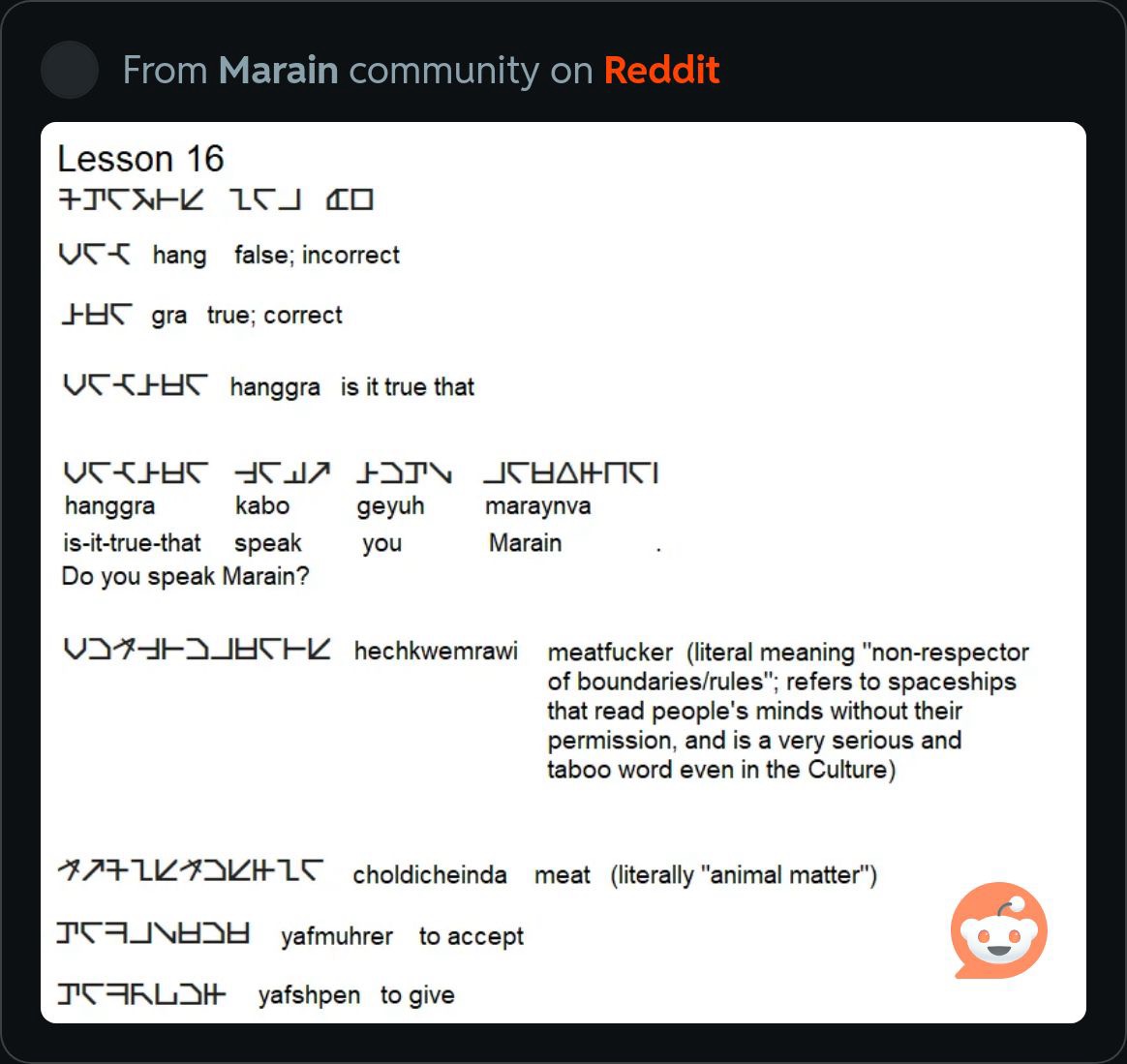
Comparing the lessons against the 430-entry dictionary snapshot turned up eleven missing entries, enough to bring the prepared update to 441. These include sein for identity, sein'gaf for name, and datsha for calling or naming. There are also hang and gra, false and true, and hanggra, “is it true that,” for yes/no questions.
hanggra has two g’s. The initial transcription lost one, which was caught by looking at the enlarged lesson image again. A useful reminder that searchable text can still be wrong.
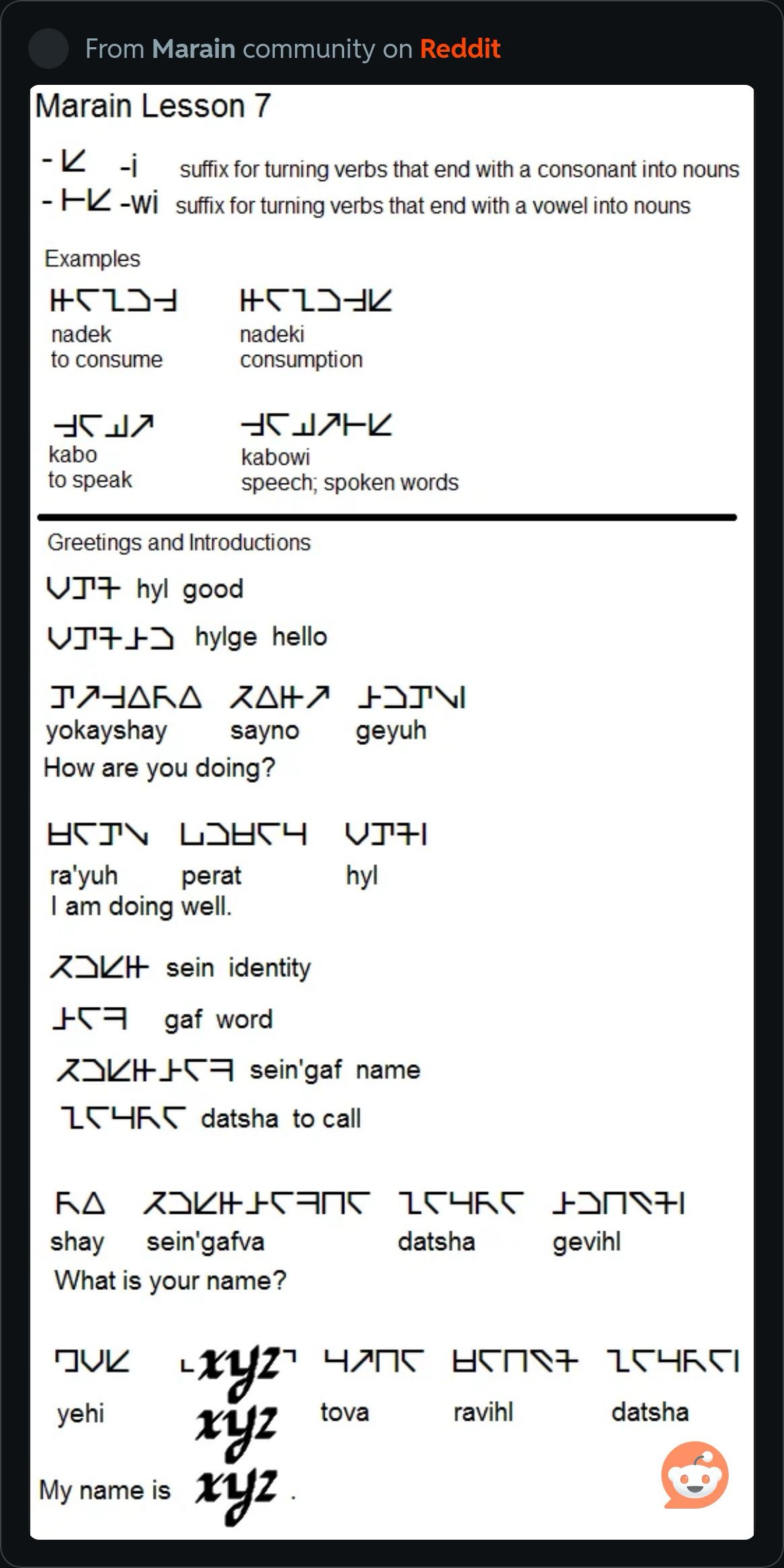
There are some useful ways to make new words, too. Lesson 7 gives -i after a consonant and -wi after a vowel for turning a verb into a noun: nadek becomes nadeki, and kabo becomes kabowi. But the ending alone does not tell us whether a newly made noun means an activity, its result, or the person doing it. New vocabulary will still need definitions.
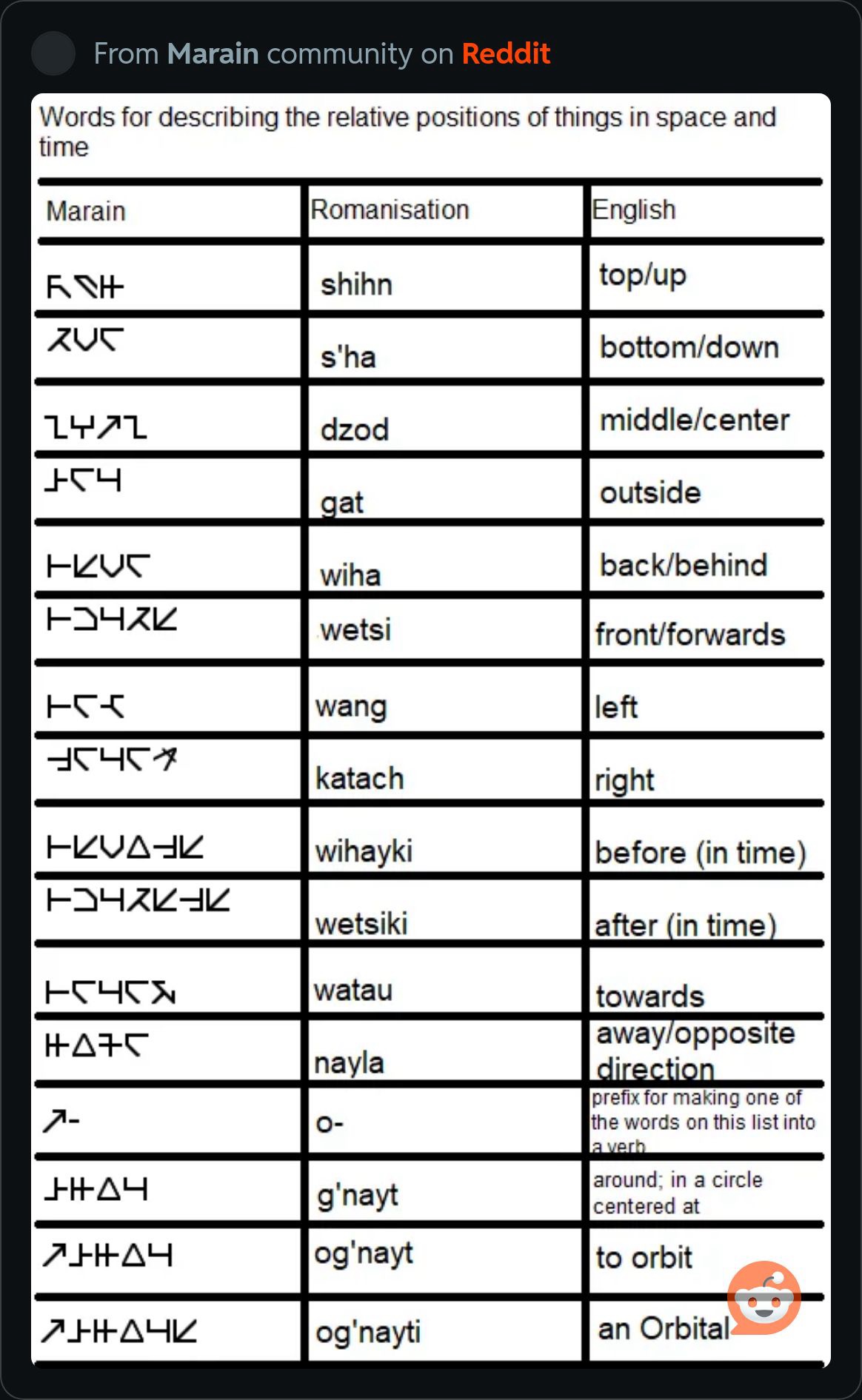
The position sheet also gives g'nayt, around, becoming og'nayt, to orbit. That is a particularly nice one to have around for my other projects. The evidence supports applying o- to that family of spatial terms; I would want more examples before sticking it on everything.
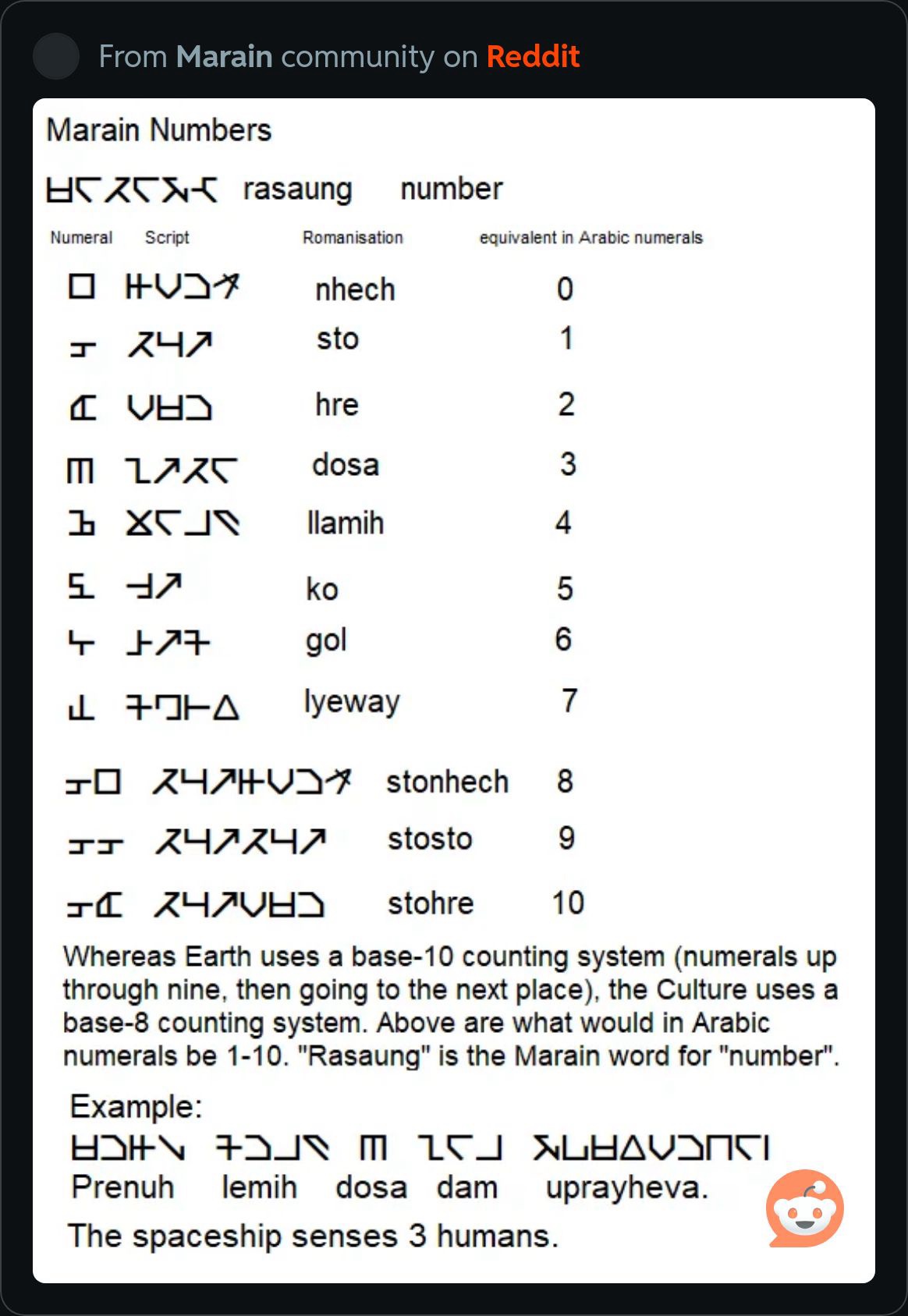
And, of course, the numbers need care. These lessons use base eight. Decimal 8 becomes stonhech, 9 becomes stosto, and 10 becomes stohre. Replacing the digits of a decimal number with Marain digit words would quietly change the value. A perfectly avoidable way to get the wrong number of spaceships.
The current phrase assistant uses dictionary matches and a small set of these rules, all in the browser. It distinguishes a phrase copied from a lesson, a newly assembled draft, and a partial match. Unknown or ambiguous vocabulary stays visible as <??>.
For example, “I eat pizza” can produce ra'yuh nadek <??> with the current draft vocabulary. We have enough to do something with “I eat,” and a conspicuous hole where the pizza should be.
The remaining gaps include general rules for negation, tense and aspect, adjective placement, and more complicated clauses. The lessons give examples to work from, but a handful of examples does not settle every possible sentence. I want to keep the difference between a recovered rule and a new proposal easy to see as this grows.
Gonna keep working towards short phrases that can be checked against the lessons, then expand from there. If the little helper runs out of language halfway through a sentence, I want to see where it ran out.
The remaining scans include the alphabet and pronunciation references, more vocabulary, and the handwritten notes. Missing lesson numbers are gaps in this set; I have kept the numbering shown on the originals.